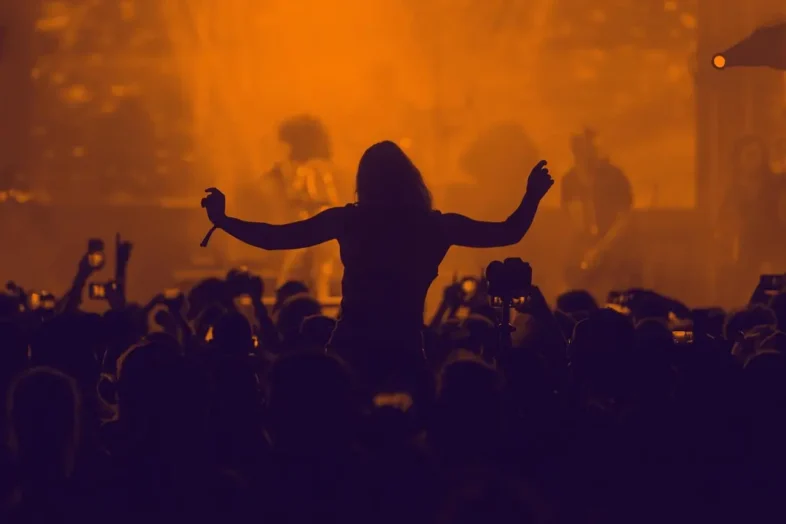
New report says 1 in 3 Gen-Z travellers choosing music festival over holidays

- July 30, 2026
- 26
- Travel
A new travel report has found that 1 in 3 Gen Z travellers now choose a music festival trip over a regular holiday, and that music-led trips, which have grown 4 to 5 times year-on-year.
Released by Zostel as a part of The Sound of the Route report, the analysis maps how live music has become a primary trigger for travel among young Indians, and the new revelations are interesting.
A significant number of travellers booked festival-led experiences through Zo Trips in FY25-26, spanning the Cherry Blossom Festival Meghalaya, Ziro Festival and standalone concert-led trips. Music festival travel now accounts for 30 per cent of the platform’s experiential portfolio, a category the travel platform is scaling as a standalone segment for India’s music community and for inbound travellers discovering the country’s live circuit.
The demand is being driven by a distinctly young group as 55 per cent of travellers booking music festival trips are aged 21-28, 30 per cent fall in the 28-34 age group bracket, and 15 per cent are 34 years and above. Around 80 per cent book solo, arriving alone and leaving with a group. The pattern points to a generation treating the Music festival calendar the way an earlier one treated the long weekend, as the default reason to plan a trip.
Ziro Festival in Ziro Valley, Arunachal Pradesh has emerged as the season’s strongest growth story, with bookings tracking 7-8 times higher year-on-year. Cherry Blossom Festival in Meghalaya, which recorded the highest number of bookings across the portfolio last year, is projected to grow at least three times for its 2026 edition. Northeast India leads the country on both the number and variety of destination-led festivals, a region where indie and rock culture runs deep across generations.
Travellers book 45 to 60 days ahead, stretching to six or seven months for niche favourites where waitlists open early. Batches are kept deliberately small at 14-15 travellers, with 10-15 batches operating per festival for high-demand events. The average trip runs for five to eight nights, built to cover both the festival and the destination around it.
The amount of money the travellers are willing to spend has widened just as fast as the category itself. Entry-level festival trips start at Rs 20,000 to Rs 25,000, the marquee domestic circuits of Ziro, Cherry Blossom Festival and Majuli command Rs 25,000 to Rs 45,000, and international festivals such as Tomorrowland begin at Rs 1.5 lakh per traveller.
Nearly 100 per cent of travellers add local experiences such as treks, cafés and local sightseeing to their festival itineraries. About 68 per cent are repeat travellers on the platform and 95 per cent have stayed at a Zostel before.
Aviral Gupta, CEO, Zostel and Zo World, said, “India’s live music economy is roughly where domestic travel was a decade ago. Live events are already a two billion dollar market and the fastest-growing part of the country’s media and entertainment industry, compounding at close to 20 per cent a year. What that number hides is the multiplier. Every rupee spent on a concert ticket unlocks roughly three to three and a half rupees in indirect spending across travel, stays and local retail, which is why the music tourism market is a different order of magnitude, valued at around 2.4 to 2.6 billion dollars today and on track towards 14 to 15 billion over the next seven to eight years. What has changed is that the festivals themselves have moved out of the metros. A traveller is no longer choosing between a concert and a holiday, because the festival is now in a valley in Arunachal Pradesh and getting there is the trip. A destination festival brings a traveller into a region for five to eight days, and much of that spend stays with the place itself, with homestays, drivers, guides and the local organisers who run these festivals in the first place.”
Interestingly, Zostel is also coming on board as the official accommodation partner for Ziro Festival 2026.
Assam, and Guwahati in particular, is building fast as one of India’s most promising live entertainment destinations following Post Malone’s 2025 concert and with Guns N’ Roses scheduled to perform in 2026. The recently launched Zostel Guwahati has already recorded a visible surge in traveller demand and occupancy around major concerts and live events.
This sits separate from the accommodation demand the platform sees during large-scale concerts such as Coldplay, Lollapalooza India, Sunburn Festival and Rolling Loud across Mumbai, Goa, Shillong and Delhi-NCR, which routinely drive full occupancy weeks or months in advance.
Gupta adds, “Music festival travel in India is still an early category. The festivals are growing faster than the infrastructure around them, and the destinations seeing the sharpest demand are the ones with the least of it. How that gap gets closed over the next few years will decide whether this stays a season of sold-out weekends or becomes a permanent line on India’s domestic travel map.”



Add Comment